Sunday, January 1, 2012

Happy New Year!

Whew! 2011 was a pretty good year for me, but I'm never sad to see a year end. I always view the new year as a time for celebration; a time for new beginnings.

After watching the awesome fireworks display we are usually treated with in our neighborhood, we start each new year off with our favorite First Footer crossing our threshold after midnight.


Yes, it is my gorgeous son - tall, dark and handsome! He walks through the front door with alcohol in hand (traditionally whiskey, but we use whatever we have, which in our case is typically wine!), usually some shortbread and a firestarter. To ensure good luck for the house for the year ahead the actual first footer into a home should be a dark haired male carrying these gifts. The symbolism of these items is:

a lump of coal (firestarter) - for a year of warmth and health
shortbread - for a year of plenty
whiskey (or wine!) - for a year of jollity and not melancholy

My family and any attendant guests then toast the new year with our hopes for what we'd like to see coming our way. My standard toast is Health, Wealth and Happiness!

On the actual New Year's Day itself, we dine on traditional foods of black eyed peas and collards. The peas are said to bring prosperity and the greens money. This year I added red cabbage to the mix.


You can find the recipes here.

For last year's words belong to last year's language
And next year's words await another voice.
And to make an end is to make a beginning.
~T.S. Eliot

May this new year bring your everything you desire!

Monday, October 17, 2011

It's National Pasta Day!

Today is National Pasta Day, so of course one needs to celebrate it by eating...pasta!


Pasta has a history. Yes, really! There is evidence that the ancient Etruscans prepared a wheat and egg paste, but it was baked not boiled. There are artifacts from a period 3,000 years ago that look remarkably like pasta dies and extruders. But naturally the material they worked on is not preserved.

The ancient Greeks had some form of flattened dough that resembles lasagna. The knowledge to mix wheat and egg with water was known long before. But the result was roasted on hot stones. The Romans quickly followed suit in the 1st century AD with a layered dish comprised of 'lasagna' and meat or fish. In the 1st century BCE writings of Horace, lagana were fine sheets of dough which were fried and were an everyday food. Writing in the 2nd century Athenaeus of Naucratis provides a recipe for lagana which he attributes to the 1st century Chrysippus of Tyana: sheets of dough made of wheat flour and the juice of crushed lettuce, then flavored with spices and deep-fried in oil.

An early 5th century cookbook describes a dish called lagana that consisted of layers of dough with meat stuffing, a possible ancestor of modern-day lasagna.

By the 5th century AD, cooking noodles was commonplace, as is known by references from the Talmud. The Jerusalem Talmud records that itrium, a kind of boiled dough, was common in Israel from the 3rd to 5th centuries AD. This record of pasta-like preparation in Arab lands provides a basis for the claim that the practice spread to Italy from Arabia. With the incursion of Arabs into Sicily, they would undoubtedly have brought a food that could travel well. A flour-based product in the shape of strings was produced in Palermo at the time that might fit the bill. A dictionary compiled by the 9th century Arab physician and lexicographer Isho bar Ali defines itriyya, the Arabic cognate, as string-like shapes made of semolina and dried before cooking. The geographical text of Muhammad al-Idrisi, compiled for the Norman King of Sicily Roger II in 1154 mentions itriyya manufactured and exported from Norman Sicily.

While for a time it was thought that Marco Polo returned from China in 1295 with pasta, there are Italian recipe books from twenty years earlier containing references to pasta dishes. However, it is certain that he did encounter pasta on his travels. Since China is an ancient civilization, with a complex culture dating back 5,000 years, it's likely that pasta existed in China very early. Marco Polo describes a food similar to "lagana" in his Travels, but he uses a term with which he was already familiar. Some historians believe that in 1295 Marco Polo brought rice flour pasta, the type used to make Chinese dumplings.

Nevertheless, pasta did become more popular during the 14th century and spread to the 'New World' as Italian and Spanish explorers sailed the seas to new lands. In the 'Old World' it continued to spread, with tubes of pasta in use at 15th century Italian monasteries. By the 17th century, it was a common food throughout the region.

In the New World, pasta grew in popularity through the 18th century. By its end, it graced the table of Thomas Jefferson and commoner alike. When the American Ambassador returned from France in 1789 he brought with him a maccaroni maker that he used to delight friends.

Macaroni and cheese was enjoyed by many during the period of the Civil war in the mid-19th century (1859-1864), owing to its ease of storage and cooking, along with the satisfying taste.

But it was with the large Italian immigration around the turn of the century that pasta really took off in America. Spaghetti, lasagna and a great many other forms became widespread as a result. With the ubiquitous consumption of pre-made dried macaroni and cheese during WWII, the dish became a staple of the American diet for decades after.

Whatever its true origins, and subsequent history, one thing is sure. Pasta is here to stay.

Here are several recipes for you to try:

Peanutty Pasta
Garlicky Red Pepper Pasta
Quick Pasta Special
Taste of the Tropics Pasta Salad
Easy Minestrone
Popeye Pasta
Fettuccine Alfreda with Gomasio
Fettuccine with Cilantro Lime Pesto

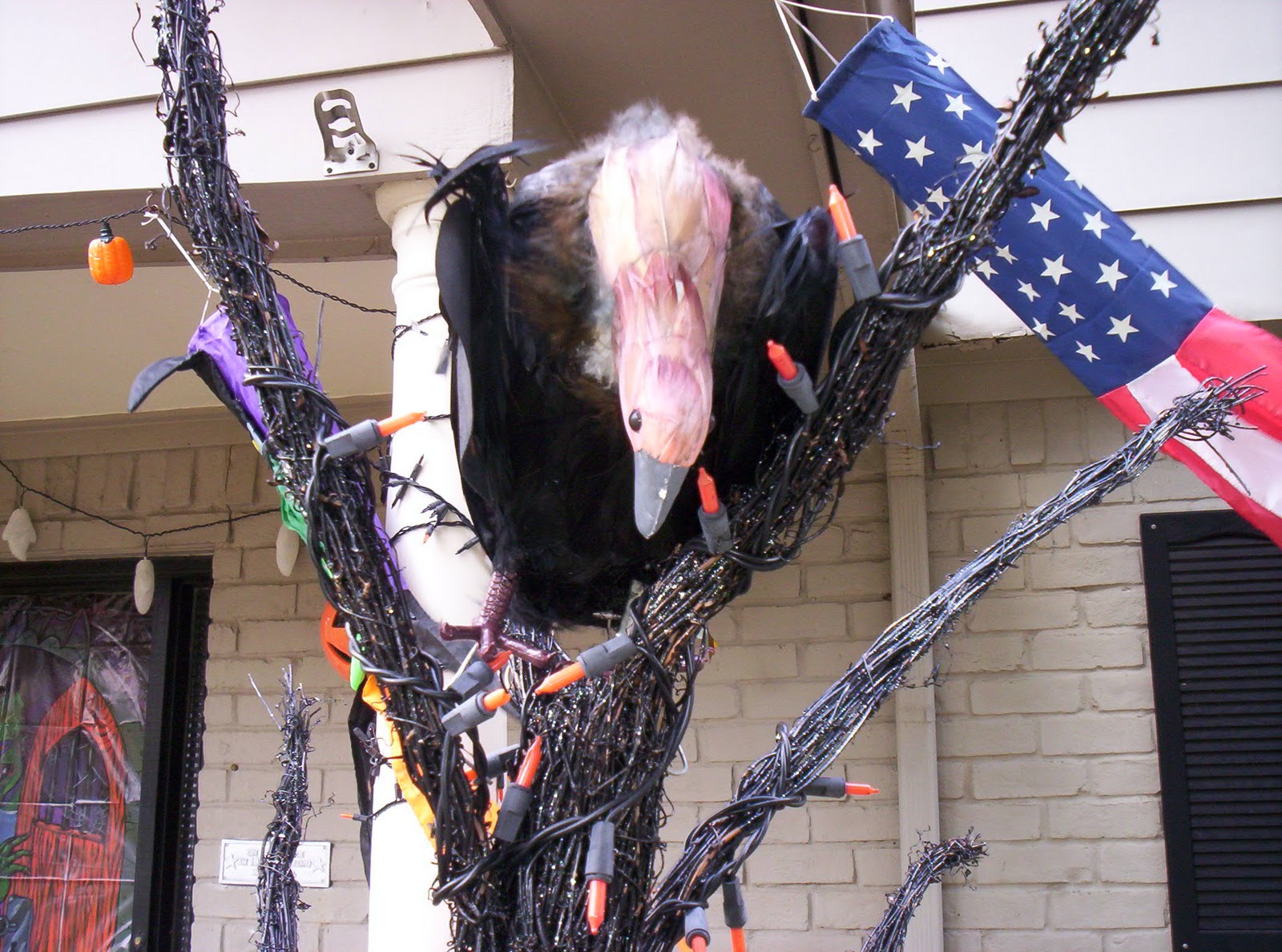
Are You Ready For Some Hallowe'en?

I am! Well, almost. Still have plenty of decorating to do.


There is so much about the month of October that excites me! I love all the spooky movies and shows that dominate this time of year. I am especially fond of the older movies, that are creepy scary, not gory scary. One of my favorites from my childhood is The Haunting. The 1963 version with Julie Harris, not the newer one with Liam Neeson.

A few years ago I was introduced to The Changeling with George C. Scott. I had to add it to my repertoire.


And, of course, ANYTHING with Vincent Price. My parents have told me about old zombie movies that they loved when they were young. I'm still trying to track down a few of those. Try as I might, I cannot get into today's zombie movies, although I will admit to being a fan of the Resident Evil movies. I couldn't even sit through the show The Walking Dead. <shudder>

I had to pull back out a book I never finished earlier this year, because it seems entirely appropriate this month: Witches Bane by Susan Wittig Albert.


I've been discovering a wealth of mysteries lately that revolve around certain themes. Albert's books take place in a small town in Texas and the main character runs an herb shop. Another series I've fallen in love with takes place in Charleston and the main character run a tea shop. I just requested several different other similarly themed mysteries from the library. Now if I could only spirit myself away to a spa and sit poolside doing nothing all day but read...

You can't consider October without appreciating the foods. I always have to do something with pumpkin this month, like last year when I whipped up some Pumpkin Alfredo.


This year I am considering an entire black and orange themed meal. Kind of excited about the prospect, really.

And who can forget the decorating? I have been collecting patterns for several cross stitch pieces and was blessed to have a friend send a pattern for me to sew a witch's hat.


I've still got a LOT to do yet, but at least it's a start! More to come! If you haven't gotten a move on for the holiday - WHAT ARE YOU WAITING FOR?

Monday, April 25, 2011

Celebrate Easter Monday the Italian Way!

The Italians have a saying, “Natale con i tuoi, Pasqua con chi vuoi”. It means "Christmas with family, Easter with whoever you like". This especially applies to the Monday following Easter.

Easter Monday or 'La Pasquetta' - literally little Easter - is a day spent when families and friends who have been solemn and pensive get together in a completely relaxed, informal, always noisy way to enjoy each other's company and - hopefully - the warmer spring weather. It is often spent by going on a picnic with plenty of yummy treats, and, of course, wine.


Although it's not really celebrated as a religious part of Easter in Italy,  (though inevitably mass is said in churches all over the country) Easter Monday does have some religious significance. It's also known in Italy as 'Lunedì dell'Angelo' ('Monday of the Angel') - the day to remember Mary and Mary Magdalene visiting the sepulchre and, finding it empty, being comforted by an angel.

The origins of Easter Monday celebrations, like the origins of Easter in Italy, are based in pagan tradition.  The ancient Roman culture feast of 'Lupercalia' was linked to re-birth after the hardships of winter and was a period of several days celebrating fertility and family.


In Old Ireland, Easter Monday was always filled with fun and festivities. Not only was it a favorite day for buying and selling livestock and merchandise at fairs and markets, it was also a time for enjoying sports, games, sideshows, dancing, eating, drinking, gambling, tugs of war, hurling matches, card games and reels and jigs. Those days are long gone, but would that dear old Ireland could go back to the Easter Mondays of long ago. Much more fun than the traffic jams as everyone returns home after spending Easter with extended family!


Easter Monday (Andre påskedag) in Norway is the end of the Easter holidays and is about cleaning, clearing and returning home (including sitting in traffic jams).

To me, the cleaning can wait another day. I like the Italian's idea of going on a picnic and dining casually with a bottle of wine. I think spending the day at a local park with a picnic basket, and incorporating some of the fun of the Irish would be grand. Invite some friends, find someone who can play guitar (or at least bring a portable music player and have plenty of Irish music to play) and play some games - frisbee or softball for the more physical guests or card or board games for the more cerebral.

Saturday, April 23, 2011

Celebrating with the Bard

So, what are you doing today to celebrate the birthday of William Shakespeare? What? You don't know what to do? Well, then, let me help you out!


There are several ways to celebrate today, and is only limited by your imagination! But, to get you started, here are several ideas:

-Make a cake replica of the Globe Theatre. When you blow out the candles, quote Macbeth: "Out, out, brief candle!" Too much? Well, hey, some of us might be so clever!
-Speak only in iambic pentameter.
-Speak in a British accent all day.
-Take a trip to Stratford-upon-Avon, Shakespeare's birthplace. If that's not practical, look at photos online of Stratford-upon-Avon and pretend you're there.
-Text a sonnet to someone.
-Perform one of his plays, or at least a scene.
-Listen to the music of a composer from Shakespeare's time. Popular music-writers from Renaissance England include William Byrd, Thomas Campion and Robert Johnson. Such music was often composed for lute and voice and can serve as a quiet accompaniment to a Shakespearean reading.
-Prepare a Shakespearean feast that features food from Elizabethan England. Savory porridge dishes known as "pottage" were popular fare, along with traditional English foods like Shepherd's Pie, and Yorkshire puddings and roasts. You can find an easy to make Blancmange here.
And remember:
Guests generally sat at benches; chairs were for the really important people. Common folk ate most food using wooden bowls & spoons.
Salt was highly prized, and usually resided at the head of the table. Hence the phrase "below the salt."
Forks weren't in common use. Fingers worked fine.
Meat was in short supply in common homes, whose inhabitants made do with grains and vegetables.
The nobility loved meat and sweets. When they got enough to eat, the lower classes may have had the more healthy diet.

Whatever you do, just make it fun and have fun!

There is the whole topic of Shakespeare gardens I could talk about, but I'll save that for a future post!

White Saturday

In the Czech tradition, today is Bílá sobota (White Saturday). I'm not sure exactly why it is called White Saturday other than the fact that the past fews days of Holy Week were spent at cleansing the soul, body and dwellings, so that everything was to be spick and span. Bílá sobota is regarded as a lucky day for sowing. The farmers place ashes on their fields to ensure a good crop, and shake the trees, so that they'll yield a lot of fruit. They say that if it rains on Bílá sobota, it will rain often during the coming year. So we know rain on Good Friday - bad, rain on Holy Saturday - good. I'd hate to be a weatherman during this time!

In Ireland, the people ate a lot of fish during Lent and by the end of Lent were probably pretty tired of it, so on Holy Saturday, the butchers would lead the people in a funeral for a fish. I'm vegan, so I don't get tired of anything we eat, since there's a lot of variety. However, in the German tradition of Good Friday, last night I did fry up a batch of tofu using spices for fish. It was really good. I slathered the slices with garlic paste, then coated them with a mixture of Indian spices and flour before frying them up crispy. Delish!

One of the more amusing things I've discovered in the research, was the penchant in Norway for reading crime stories and detective novels during Easter. In order to cash in on this national pastime, publishers churn out series of books known as "Easter-Thrillers" or Påskekrimmen. TV stations, radio and newspapers also jump on the bandwagon by running detective series based on the works of famous crime novelists such as Agatha Christie, P.D. James, Simenon and Ruth Rendell. Interesting that it was during this time that I stumbled upon my latest addiction - China Bayles mysteries (she runs an herb shop) and Theodosia Browning mysteries (she runs a tea shop). I am currently reading Witches Bane by Susan Wittig Albert and Death by Darjeeling by Laura Childs.


Okay, it's a beautiful day and I'm off to Lowe's to take advantage of their free tree give-a-way today in celebration of Earth Day and then a trip to the library! Get thee to a Lowe's near you to get a tree, and check out a good mystery to lose yourself in, in the Norwegian tradition!

Friday, April 22, 2011

Celebrating a Good Friday Earth Day!

It both fascinates and amuses me that Good Friday this year should also fall on Earth Day.  Why? The continuing saga of my tradition research. According to an old Czech saying, for example, farming should not be done on Good Friday. Na velký pátek zemi nehýbej. ("On Good Friday, do not move the soil.") And yet, in Ireland, little or no work was done on the land, except for the planting of a small quantity of grain or potatoes to invoke a blessing on the crops. Czechs believe turning the soil is a bad thing on this day, but the Irish believe turning the soil to plant potatoes is a blessing. I love this stuff!


For the Czechs, the weather for the whole year is foretold from the weather on Velký pátek (Good Friday). For instance, if it rains on Velký pátek, then the rest of the year will be dry. They have a saying, "A rainy Good Friday makes for a thirsty year." Another belief is that on Velký pátek, according to legend, anyone can look upon the sun without being blinded by its glare. In folk tradition this day is closely connected with the belief in the magic powers of the Earth - how appropriate, then, that it should fall this year on Earth Day! Many believe that on this day the Earth gives up its secret treasures before sunrise.


It was believed that Mt. Blaník opens up for a couple of hours on this day. Mt. Blaník is famous among the Czechs as it's said that an army of Czech knights lies asleep within the mountain, waiting to come forth and help the nation in its hour of greatest danger, that when the Motherland is in danger in its darkest times and close to ruin, the equestrian statue of King Wenceslas will come to life. He will raise the sleeping army in  Blaník, and upon crossing the Charles Bridge his horse will stumble and trip over a stone, revealing the legendary sword of  Bruncvík.  With this sword, King Wenceslas will slay all of the enemies of the Czechs, bringing peace and prosperity to the land.

Kind of reminds me of King Arthur.

On a more mundane level, the day was spent making sure the house, yard and out-buildings were clean and tidy.

Sounds like an ideal way to spend  Earth Day!
Related Posts Plugin for WordPress, Blogger...